
Vibration in the car
Many dangers may come to mind in connection with driving or car travel, but there is a hidden yet persistent phenomenon that very few would think of. This is the constant vibration inherent to the nature of the vehicle, against which it might also be a good idea to use a car lumbar support.
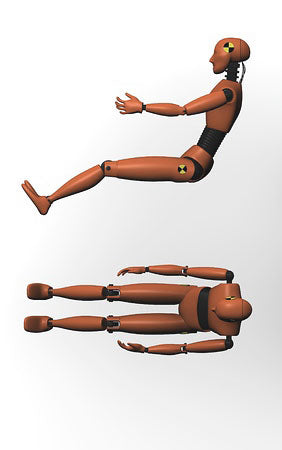
What causes continuous vibration in the car that can also be harmful to the human body?
Primarily the engine, caused by the rhythmic movement of the pistons. Designers are also aware of this phenomenon, which can be reduced by the number of cylinders, but this increases manufacturing costs, so this solution – among other reasons – has not become widespread. Manufacturers reduce vibration partly by mounting the engine on special rubber mounts connected to the body, and partly by equipping clutches and flywheels with vibration damping elements. The spread of electric cars will represent a major breakthrough, as the vibrations of the electric motors that drive them are much smaller.
Vibrations coming from the chassis can also be continuous or occasional. If we drive on a bad, bumpy road full of holes and potholes, then despite the shock absorbers, the vehicle’s parts – even if dampened – transmit the vibrations to the passengers’ bodies. Continuous vibration can also be caused by tires deforming from their circular shape during use. Even if this is more or less controlled by balancing, the deformation of brake discs can still occur, causing similar symptoms.
The airflow hitting the vehicle while driving also causes vibrations as it contacts the car’s parts.
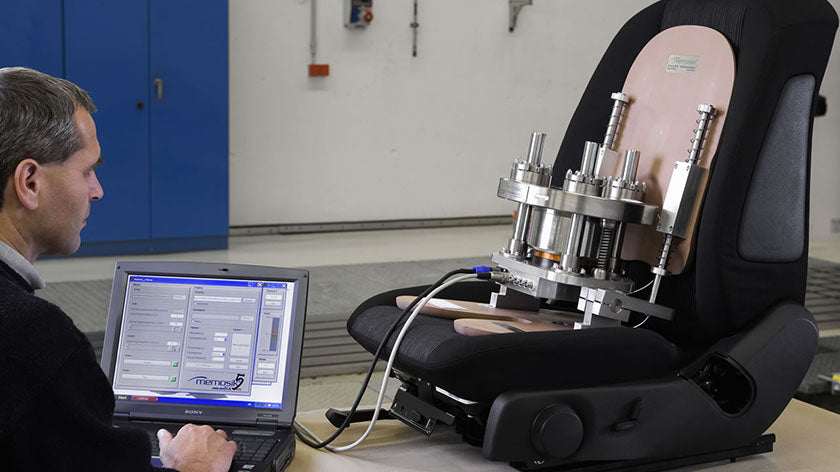
These vibrations certainly affect our bodies and can also be measured. The fact that car manufacturers are aware of this and take these factors seriously is best demonstrated by the engineers who already simulate and measure the harmful effects caused by the future model using complex software during the design phase. Manufacturers must comply with regulations and standards from this perspective as well. The problem is only exacerbated from the spine's point of view by the fact that if we sit in a bad position in the car seat, the continuous vibration amplifies the harmful effect of the bad position. Ultimately, the vibration strengthens the forces acting towards herniation. Therefore, it is very important to eliminate the bad position, and this can be easily done by using a lumbar support, thus neutralizing the core of the problem.